The Liturgical Life of the Garden: Prayerful Wisdom in the Seasons

The Lord whispers in the garden, if we still ourselves enough to hear it.

It is the kind not preached with words, but received in the rhythms of sowing and reaping, in the new growth of spring and the dying of fall. In the garden, time ceases to something dictated by the clock, and becomes something greater: a sacramental sign of grace in the cycles of dying and rising.

When we tend the garden, we absorb the lessons of the seasons. In this seasonal living, the soul finds a rhythm of prayer deepened by habit, embodied in the work of the moment. We learn to pray not instead of digging or weeding, but through it.

Spring: The Liturgy of Hope

Spring is the season of audacity. It dares us to believe in beginnings even before they look like anything. We press unimpressive seeds, small and dry as dust, into the soil. We water and we wait. Spring teaches the gardener to trust.

There is a particular vulnerability in planting. You cannot force growth. You can only prepare the soil, bury the seed, and surrender. In this way, spring becomes a living act of faith—a reminder that God works imperceptibly and in His own time. Some seeds germinate only in darkness.

For the soul weary from winters of waiting, the garden in spring whispers: “Behold, I make all things new.” A faithful gardener hopes for the future, even when nothing has sprouted yet.

And so, we sow—not just lettuce and peas, but prayers: for children, for healing, for clarity, for the slow blooming of what we cannot yet name. Each seed planted is a fiat: let it be done according to Your will.

Summer: The Discipline of Stewardship

Where spring gives us the joy of newness, summer gives us the grind. The heat is relentless. The weeds are faster than the beans. When the thrill of planting has passed, the garden demands the steady work of diligence: watering, pruning, guarding from pests.

In summer, the garden teaches perseverance. It teaches us dedication beyond excitement, faithfulness to what’s entrusted to us, simply it is ours to tend.

Summer in the garden is a season of fidelity, a reminder that what we tend daily—even imperfectly—will bear fruit in due time. It’s not glamourous work, but something better: a testament to the sanctification of the work of our hands, labor offered in imitation of the Creator who gave us life from the dust.

Autumn: The Abundance of Gratitude and the Surrender of Letting Go

With autumn comes the harvest: crisp mornings, basketsful of pumpkins and apples-- the dizzying bounty of what the earth has given. Autumn is the time to give thanks.

It is also the time to learn to let go.

There is no keeping a harvest forever. The basil goes to seed. The squash vines wither. The garden browns. Autumn teaches us that abundance is not meant to be hoarded but shared, preserved, and released. The spiritual life echoes this in its call to surrender gifts back to God: the children we raise, the work we love, even our very selves. As Robert Frost reminds us, “Nothing gold can stay.”

To pray in autumn is to pray with open hands. “Thank You,” we say. “And now, take what must be taken. Let die what must die.”

It is a Eucharistic season—where the harvest is gathered, broken, and given away.

Winter: The Hidden Life of Rest

As the days grow shorter, the garden sleeps beneath a blanket of snow. At first, it feels like loss: empty beds, barren branches, and silence when the birds used to sing.

But winter is not always death. Often, it is merely dormancy. Beneath the frost, the soil restores itself while roots deepen. Chill hours transform barren branches to bear fruit in due season.

Winter speaks to us of the gift of Sabbath: rest, too, is holy.

So too in prayer. In the absence of sweet fruits, we feel that God has withdrawn. If we rest in the stillness, we can recognize desolation as deeper invitation to love God not for His sweetness, but for God alone.

In winter, we are called to watch the snow fall, to rest alongside the garden, and to trust that spring—and new life—will come again.

Seasons as Sacred Teachers

There is no rushing the harvest. The garden teaches us to imitate our God who is patient, who delights in small things, who ordained that all of life should move in cycles—birth, growth, death, rebirth.

To garden is to participate in the liturgy of creation, a calendar older and wiser than our own. It asks us to meet God both in morning prayer, and in the slow turning of compost.

As Wendell Berry reflects, “There are no unsacred places; there are only sacred places and desecrated places.” When we faithfully tend our garden, it becomes a sacred place, one that blesses us beyond the food that nourishes; it nourishes our very souls.

If you enjoyed this reflection, you might also like my book, Grow Where You’re Planted: Reclaiming Eden in Your Own, a family guide to seasonal abundance and self-sufficient living wherever you are.


Cultivating the Garden of Our Souls

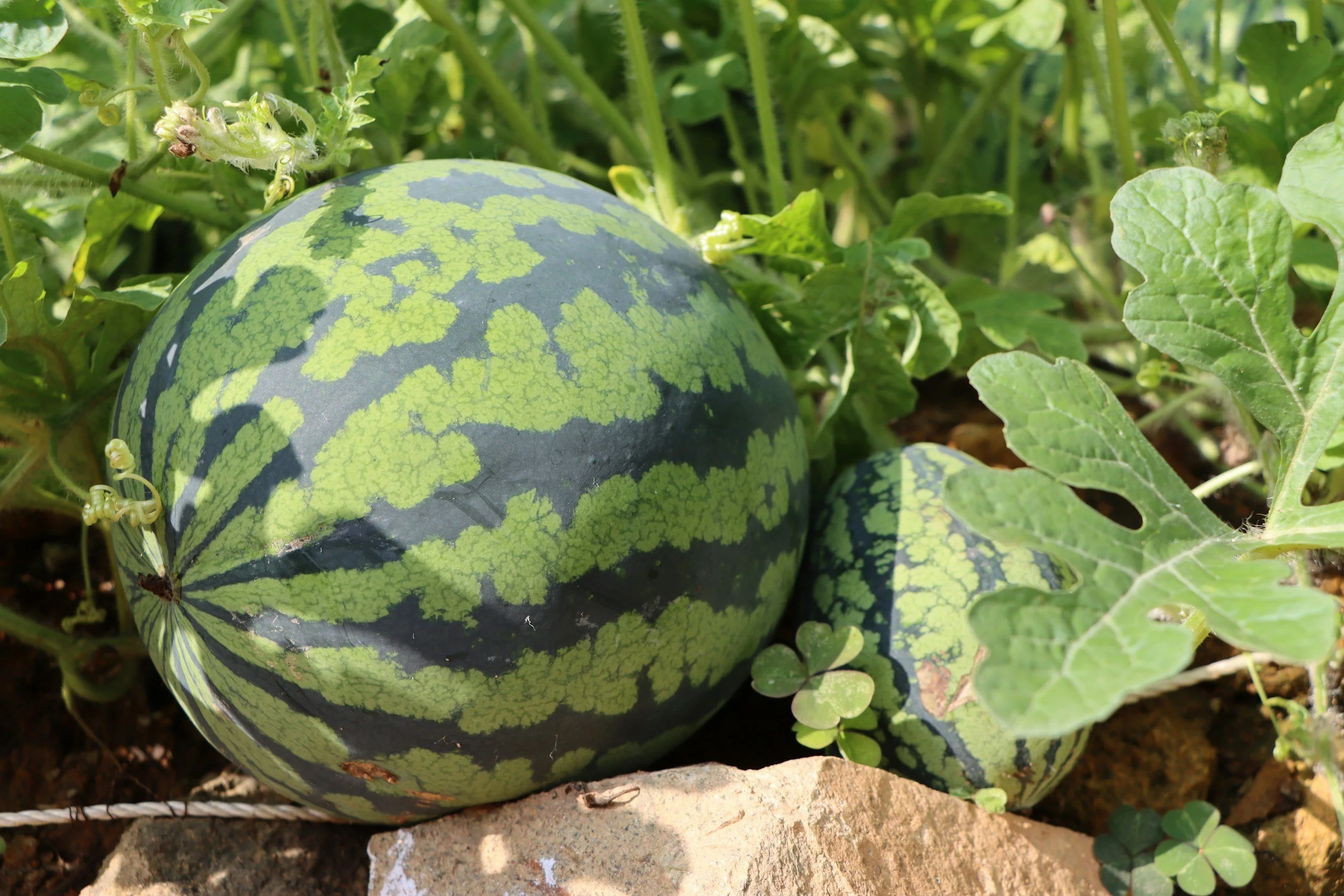
What is summer to you? Does it taste like watermelon and smell like sunscreen? For gardeners, summer smells like warm earth and tastes of home-grown tomatoes bursting with tangy sweetness. It also means a sweaty, daily battle nettle with vicious villains: squash bugs and weeds.

When I first planted my backyard garden, I chose the “no dig” method of layering cardboard and compost right over our weeds. I hauled in wheelbarrow after wheelbarrow until our small patch of earth was no longer a snarled mess, but an unmistakable garden plot ready for planting. It was exhausting work, but each shovelful brimmed with the promise of homegrown vegetables, and that vision drove me on. I naively believed the no-dig promise that the cardboard and mulch would be enough to smother the weed seeds lurking below.


Confession and the Garden of the Soul

            It was around this time that my daughter received her first Confession, which meant that I found myself coaxing and cajoling a fearful and anxious 8-year-old to our local parish for her second Confession, which held none of the excitement and glamour of the first to obscure the objectively nerve-wracking nature of bearing your weaknesses to a total stranger. I couldn’t really blame her for her reluctance; I am an adult convert, and 15 years later, I feel the same aversion when dragging myself to Confession.

Shame spills over into hot tears, and I berate myself for failing to avoid those same sins that land me in Confession week after week. When will I stop needing Confession? I ask myself in exasperation. It is at this moment that a tiny drop of wisdom finally bubbles over from my head, soaking into my heart.


I pushed open the gate to our back garden in July after about a month of neglect to find my once pristine vegetable beds entirely overrun by weeds. There was cheese weed with its deep taproots, nearly impossible to remove without the right tools. There were tall bright green grasses with shallow roots that nonetheless reappear every year, and – worst of all – nefarious bellbind with its deceptively lovely white blooms wound its way up my crops, choking the life out of them (Incidentally, this is the indefatigable weed that inspired the name of the demonic title character of my book, The Bellbind Letters, a creative take on C.S. Lewis’s spiritual classic for Catholic moms). 

I spent the better part of a week on my hands and knees yanking every last one out by the roots. When I finally stepped back to survey my work, my triumph was short-lived: although my well-defined borders were once again visible, they were dotted with tiny specks of green from weeds that had either escaped my notice during the initial battle or had simply grown back in the time it had taken me to tackle the other beds. Tempted as I was to hang my head in shame at my utter inability to dominate this space, a fleeting moment of grace whispered deep in my heart like the fluttering of a hummingbird’s wings: maybe what the Lord is trying to grow through this garden is my patience with myself.

Like our sin, weeds are impossible to eradicate entirely. Continuous weeding is the fate of every gardener, and if we want to make of our souls a delightful garden for our Lord, we find ourselves in need of constant cultivation. We will always need to be diligently weeding out vices. Frequent visits to the confessional will prevent the roots of more serious sins from penetrating too deeply and dissuade the deleterious effects of sin from choking out emerging seedlings of virtue.

Of course, tending the garden of our souls is not something we are meant to do on our own. We must consult the Master gardener, sower of good seeds. What is His vision for this space? What fragrant varieties would He like to see planted here?

As gardeners and disciples both, we cannot become overly distressed when we see the weeds creeping in. The Master gardener calls us to a life of joy and unceasing prayer. Of course, weeds cannot be permitted to flourish in the garden, but their appearance is not cause for despair. He expects to find weeds, and so should we. If we attend to them diligently, day by day, we will find that they can be managed. With His help, flowers will still blossom and trees bear good fruit.

If the Master still sees all the beauty in this garden, why shouldn’t we?


If you enjoyed this reflection, you might also like my book, Grow Where You’re Planted: Reclaiming Eden in Your Own, a family guide to seasonal abundance and self-sufficient living wherever you are.


Reclaiming Eden in a Backyard: On Growing Things Where You Are

I used to believe I couldn’t begin the life I longed for until I lived somewhere else. I dreamed of a homestead: wide open space, chickens underfoot, rows of vegetables stretching toward the sky. I read every how-to book, watched YouTube videos of families living the life I wanted, and waited—aching—for the circumstances that would finally make it possible.

Meanwhile, the small suburban lot we actually lived on—a patch of lawn, a scraggly tree, a few planter boxes—sat underused and unnoticed. And I remained sick, tired, and overwhelmed.

It wasn’t until my autoimmune diagnosis brought everything to a halt that I began to see clearly: I didn’t need to be somewhere else to begin. The healing I longed for wouldn’t come through escape or reinvention. It would come through stewardship—through tending what I’d already been given.

So I planted a garden.

Not a perfect one, not an Instagram-worthy one—just a humble square of raised beds on our one-third acre. It didn’t look like much. But the act of planting changed something in me. For the first time in a long while, I felt hope. Something was growing. And so was I.

Learning to Live with the Seasons

As the tomatoes swelled and the cucumbers twisted their way up the trellis, I started paying closer attention to the natural seasons—not just the liturgical ones I’d always loved, but the quieter rhythms of the soil: sowing, growing, harvesting, resting.

These rhythms became teachers.

Spring called for courage—the humility to begin again. Summer required persistence and watchfulness. Autumn taught gratitude and the grace of letting go. And winter, which I’d always dreaded, turned out to be a holy invitation to rest, to root, to prepare.

Ora et labora, the Benedictines said: pray and work. The garden showed me how the two are intertwined. Tending the soil, hauling compost, watering seedlings—these became prayer, too, as acts of reverence and ways of saying, “Thank you.”

The Gift of Limits

We live in a culture that exalts expansion—bigger houses, broader reach, more of everything. But gardening, especially in a small space, teaches the beauty of limits.

You can’t grow everything. You can’t harvest out of season. You have to learn your place—its climate, its soil, its particular gifts and constraints—and work with it rather than against it.

This posture of cooperation, of humility, is deeply countercultural. It is deeply healing, especially for a mother learning to live gently in her body again, and to raise children who see creation not as a resource to exploit but as a wonder to steward.

I started learning lost skills—how to preserve, ferment, compost, propagate. How to say, “No,” to the convenience of industrial agriculture and, “Yes,” to the slow, regenerative work of growing what we eat. The garden reduced our grocery bill. It expanded our sense of abundance. It reminded me of the dignity of domestic life, and the grace to be found in simple things.

Raising Little Gardeners

Children, it turns out, are natural stewards. They don’t need convincing to love the earth; they just need time in it: dirt under their nails, watering cans that spill more than they pour, the joy of finding watching worms wriggle, and the taste of strawberries warmed by the sun.

Each season, I invite my children more deeply into the work—letting them choose seeds, start compost, harvest with sticky fingers. I want them to know where food comes from. I want them to know the power of planting and the humility of waiting.

And I want them to learn what I am still learning: that we are not the masters of creation. We are its caretakers. We belong to the earth as much as it belongs to us.

I still dream of land sometimes. But I no longer believe that’s where my real life begins. It began when I stopped waiting and started tending. When I embraced the grace of enough. When I realized that Eden isn’t a place we recover by relocating—it’s a garden we reclaim, one bed at a time, wherever we are.

This summer, I’ll be planting again. You can find me in the backyard with dirt on my hands, a basket on my hip, and children laughing in the sprinkler nearby. It’s not a farm, but it is holy ground.

And we’re growing.

This reflection is drawn in part from my book, Grow Where You’re Planted: Reclaiming Eden in Your Own Backyard, a family guide to seasonal abundance and self-sufficient living wherever you are.

Amazon Gardening Favorites

My Favorite Garden Items from Amazon

Gardening has always been a passion of mine, and over the years, I’ve discovered some fantastic products that have made my gardening experience even more enjoyable. Here are my top picks from Amazon that I absolutely love:

  1. Elevated Raised Bed

    • This elevated raised bed is perfect for those who want to garden without bending over. It’s sturdy, easy to assemble, and provides ample space for growing a variety of plants.

  2. 8’x4’ Raised Beds:

    • These raised beds are ideal for creating a well-organized garden. They offer plenty of room for planting and are made from durable materials that will last for years.

  3. White Picket Fence:

    • Add a touch of charm to your garden with this classic white picket fence. It’s easy to install and provides a beautiful border for your garden space.

  4. T-posts:

    • These T-posts are essential for supporting garden fencing or netting. They’re strong, reliable, and easy to drive into the ground.

  5. Above Ground Pool:

    • While not a traditional garden item, this above ground pool is perfect for cooling off after a long day of gardening. It’s easy to set up and provides hours of fun for the whole family.

  6. Garden Netting:

    • Protect your plants from pests with this durable garden netting. It’s easy to install and can be used for a variety of purposes, including covering raised beds or fruit trees.

  7. Adjustable Garden Stakes:

    • These adjustable garden stakes are perfect for supporting growing plants. They’re easy to adjust and provide excellent support for tomatoes, beans, and other climbing plants.

  8. Mycorrhizae Root Growth Enhancer:

    • Boost your plants’ root growth with this mycorrhizae root growth enhancer. It’s easy to use and helps improve nutrient uptake for healthier, more robust plants.

  9. Organic Liquid Fertilizer:

    • Keep your plants thriving with this organic liquid fertilizer. It’s made from natural ingredients and provides essential nutrients for strong, healthy growth.

  10. Weed-free Garden Straw Mulch:

    • This weed-free garden straw mulch is perfect for keeping your garden beds neat and tidy. It helps retain moisture, suppress weeds, and adds organic matter to the soil.

  11. Wood Trellises:

    • These wood trellises are perfect for supporting climbing plants like cucumbers and peas. They’re sturdy, attractive, and add a vertical element to your garden.

  12. Buckwheat Cover Crop:

    • Improve your soil health with this buckwheat cover crop. It’s easy to grow and helps suppress weeds, improve soil structure, and attract beneficial insects.

  13. Micro-clover Seeds:

    • These micro-clover seeds are perfect for creating a lush, green ground cover. They’re low-maintenance, drought-tolerant, and provide a beautiful, soft lawn alternative.

I hope you find these garden items as useful and enjoyable as I have. Happy gardening!

Backyard Homestead Tours

Come tour our backyard garden and get a look at how we feed our family from our suburban homestead. We are slowly turning this typical backyard into an organic oasis of abundance, and I’d love to take you along to see how we’re getting creative with our space to increase production. This year has been a series of mishaps and heartbreaks, but we are learning a lot and I’d love to have you along for the ride!

How to Harvest and Dry Herbs for Winter

Harvest and dry herbs with me! In this video I take you along in the garden with me as I harvest and dry many of our perennial herbs for storage and use over the winter. I love eating my herbs fresh in the summer, but drying herbs has been a game changer in my kitchen! I’d love to hear: what are your favorite herbs to grow for storage herbal teas??

How We Built Arched Trellises to Expand Our Growing Space

Come along with us as we extend our growing space with vertical gardening using arched trellises. We built 7 DIY arched trellises using cattle panels in less than 2 hours, and it was so simple!

We used 16’ cattle panels from a local farm store, 4’ t-posts, and zip ties and the effect in the garden is simply stunning. Aside from adding interest to our garden design, beauty and space for David Austen climbing roses, these DIY trellises allow us to grow vertically, adding nearly 200 square feet to our growing space!

That is a HUGE deal when we are trying to grow all our own food in our 1/3 acre backyard homestead! We were able to get all the supplies for under $50 per trellis in 2024, making them by far the largest and cheapest options we could find. We hope you enjoy our video on how to build diy arched trellises, and get some valuable tips and tricks and ideas of how else you might use cattle panels to build cucumber trellises, tomato trellises, melon trellises, squash trellises, pumpkin trellises and more!

How Much Land Do You Need to Homestead?

Can we be self-sufficient in 1/3 acre of land in the suburbs? It’s a slow road to calling becoming worthy of the name “homestead” but we’re sharing our journey as we develop this space and the skills we need to provide as much food as we can for our growing family. We’re delighted to have you along for the ride!